Cyprus's Nicosia 1st, Belgium's Leuven 4th on Best European Cultural Destinations 2026 list

Looking for the ideal European city break in 2026, where heritage, creativity and everyday local life blend seamlessly? The Best European Cultural Destinations 2026 selection celebrates ten cities where culture is not a backdrop, but a living, evolving experience shaped by history, innovation and participation.
The Top 10 Cultural Destinations in Europe 2026 is:
1: Nicosia, Cyprus. Final Cultural Score: 18.6 / 20
At the top of the ranking, Nicosia stands out as a city where culture is lived daily rather than preserved behind glass. Europe’s last divided capital has transformed its complex history into a source of creative energy, weaving Byzantine heritage, Venetian fortifications and contemporary art into a uniquely Mediterranean cultural identity.
Within the Walled City, historic buildings are continuously reactivated as galleries, ateliers, performance spaces and cultural hubs. Museums such as the Leventis Museum coexist with experimental art spaces, while festivals like the Nicosia International Festival turn public squares into open-air stages. Beyond the walls, universities and creative initiatives give the city a youthful, intellectual pulse.
Recognised as a creative-friendly destination, Nicosia invites visitors to participate - through workshops, open studios and community-driven cultural projects. Its growing reputation as a culinary and beverage capital further reinforces culture as a multisensory experience, from innovative mixology to contemporary Mediterranean cuisine. Bathed in light for most of the year, Nicosia emerges as a capital where history fuels creativity rather than restraining it.
2: Florence, Italy. Final Cultural Score: 18.45 / 20
Florence or Firenze remains one of Europe’s most complete cultural cities — a place where artistic heritage and refined daily living are inseparable. The city’s Renaissance masterpieces, from the Uffizi Galleries to Michelangelo’s David, continue to define global cultural history, yet Florence never feels static.
Beyond its iconic museums, contemporary galleries and creative spaces bring new voices into the city’s artistic dialogue. Craftsmanship remains central to Florentine identity, with leather workshops, artisan studios and design boutiques sustaining traditions while adapting them to modern tastes.
Florence’s cultural appeal also unfolds at the table. Tuscan cuisine — from ribollita to wild boar ragù — expresses the same respect for time, ingredients and place as its art. With Brunelleschi’s dome anchoring the skyline, Florence proves that culture here is not spectacle, but a way of life shaped by beauty, discipline and taste.
3: Vienna, Austria. Final Cultural Score: 18.35 / 20
Vienna excels at turning heritage into performance. Imperial architecture, classical music and historic cafés create a refined framework, while contemporary creativity keeps the city in motion. Rather than freezing its past, Vienna integrates it into everyday cultural life.
The MuseumsQuartier embodies this balance, where contemporary institutions stand alongside collections dedicated to Klimt, Schiele and the Habsburg legacy. The Albertina and Kunsthistorisches Museum continue this dialogue, connecting imperial grandeur with innovative exhibition programming.
Vienna’s café culture elevates lingering into an art form, while traditional cuisine — from Wiener Schnitzel to Tafelspitz — remains central to its cultural identity. Whether in a concert hall or a neighbourhood wine tavern, Vienna’s cultural rhythm is defined by balance, elegance and continuity.
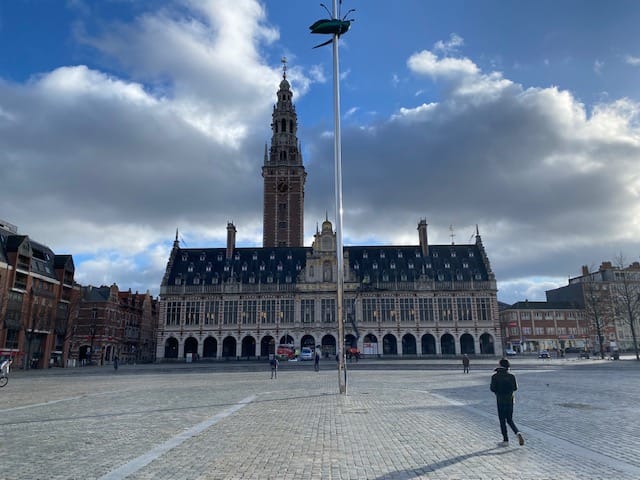
4: Leuven, Belgium. Final Cultural Score: 17.65 / 20
Leuven or Louvain represents a forward-looking vision of European culture. Shaped by one of Europe’s oldest universities, the city thrives on intellectual exchange, experimentation and openness. Its success as European Capital of Culture 2030 reflects a model based on participation rather than monumentality.
Historic Gothic architecture blends effortlessly with sustainable design, digital art and public installations. Institutions like M-Museum Leuven and STUK Arts Centre mix old masters with contemporary and interdisciplinary work, reinforcing culture as a shared process rather than a finished product.
Multilingual, youthful and human in scale, Leuven’s cafés, public spaces and cultural venues invite dialogue rather than consumption. It is a city where culture evolves through collaboration — quietly radical, inclusive and future-oriented.
5: Šibenik, Croatia. Final Cultural Score: 17.55 / 20
Šibenik is one of the Adriatic’s most convincing cultural success stories. Unlike many coastal destinations, it has resisted becoming a museum town, instead reinvesting its heritage into contemporary cultural life.
The UNESCO-listed Cathedral of St James anchors the historic centre, while restored fortresses - notably St Michael’s Fortress - now host concerts and festivals overlooking the sea. Creative studios, galleries and design-led cafés are woven naturally into the old town’s stone fabric.
Šibenik’s culinary culture mirrors its identity: local, seasonal and rooted in Dalmatian tradition. With its strong festival calendar and commitment to sustainable revitalisation, Šibenik demonstrates how small historic cities can remain culturally ambitious.
6: Verona, Italy. Final Cultural Score: 17.45 / 20
Verona’s cultural strength lies in harmony. Roman remains, medieval architecture and Renaissance palazzi coexist seamlessly, creating a cityscape that feels balanced rather than monumental.
The Arena di Verona remains a living stage, hosting opera performances that connect ancient architecture with contemporary audiences. Beyond opera, daily life unfolds in elegant piazzas, artisan shops and shaded cafés, preserving an atmosphere of quiet refinement.
Local cuisine, particularly risotto and Valpolicella wines, reflects the city’s deep connection to its surrounding landscape. Compact and walkable, Verona rewards slow exploration, where culture reveals itself through rhythm rather than spectacle.
7: Tomar, Portugal. Final Cultural Score: 17.25 / 20
Tomar offers one of Europe’s most contemplative cultural experiences. Dominated by the Convent of Christ, the former stronghold of the Knights Templar, the city is steeped in symbolism, geometry and spiritual history.
The UNESCO-listed complex reflects Portugal’s Age of Discovery, while the old town below unfolds gently along the Nabão River. Tiled façades, small bookshops and intimate squares reinforce a sense of continuity and local belonging.
Tomar’s cultural appeal lies in its restraint. Cuisine is simple and regional, evenings are quiet, and history reveals itself gradually. It is a destination for travellers seeking meaning, authenticity and narrative depth.
8: Rouen, France. Final Cultural Score: 16.75 / 20
Rouen combines Gothic grandeur with contemporary elegance. Its cathedral - immortalised by Monet - dominates the skyline, while half-timbered streets and historic squares tell stories of medieval power and human drama.
The city’s cultural renewal is visible in its galleries, design spaces and creative reuse of historic buildings. Rouen balances reverence with reinvention, allowing modern creativity to coexist naturally with sacred architecture.
Culinary traditions rooted in Normandy’s rich terroir — apples, dairy, duck and cider — complement its artistic heritage. As night falls, light projections on the cathedral and lively riverbanks reveal Rouen as a city of atmosphere and depth.
9: Oxford, United Kingdom. Final Cultural Score: 16.45 / 20
Oxford’s cultural influence extends far beyond its size. The city’s colleges, libraries and traditions have shaped literature, science and philosophy for centuries, creating an atmosphere where knowledge itself becomes cultural heritage.
Architectural beauty is inseparable from intellectual life, whether in the Bodleian Library, Christ Church College or along the rivers Cherwell and Thames. Yet Oxford also remains lived-in and human, with pubs, cafés and bookshops forming part of its daily rhythm.
Compact and walkable, Oxford offers a cultural experience defined by curiosity, continuity and quiet elegance.
10: Graz, Austria. Final Cultural Score: 16.25 / 20
Graz exemplifies how mid-sized cities can lead cultural innovation. Its UNESCO-listed historic centre is complemented by bold contemporary architecture, most notably the Kunsthaus Graz and the Murinsel.
Design, sustainability and food culture play a central role in the city’s identity. Styrian cuisine, local wines and farm-to-table dining reflect a strong connection between culture and landscape.
Relaxed yet intellectually confident, Graz integrates creativity into everyday life, offering a model of cultural balance that feels authentic rather than performative.
The methodology behind the ranking
The ranking was developed in three stages, combining quantitative analysis, expert evaluation and traveller insight.
First, a longlist of 40 European cities — ranging from major capitals to emerging cultural destinations — was identified. Each city was assessed using measurable cultural indicators, including museum density, diversity of cultural venues and the strength of its year-round festivals and events calendar.
From this longlist, cultural experts evaluated destinations based on heritage value, contemporary creativity, visitor experience and international cultural relevance, selecting ten cities with the strongest and most distinctive cultural identities.
Finally, 22,093 travellers from 131 countries rated these ten destinations according to their desire to visit in 2026, the authenticity of the cultural atmosphere and overall cultural appeal. Expert scores and traveller ratings were weighted equally to produce the Final Cultural Score, ensuring a balanced perspective between professional assessment and public perception.
The result is a ranking that reflects not only Europe’s cultural past, but the cities shaping how culture is lived and experienced today — dynamic, inclusive and alive.
On tourism
- Visit Antwerp in a day or two.
- Antwerp tourism breaks records again in 2025 with strong growth in day visitors, overnight stays and international events.
- ANTWERP | Record 15.8 million day tourists, 2.7 million overnight stays in 2024.
- ANTWERP | 13.5 million day tourists, 2.6 million overnight stays and less Dutch visitors in 2023.
- ANTWERP | 2022 tourism statistics show recovery towards 2019 numbers.
- ANTWERP | 2.2 million day tourists and 398K overnight stays in the summer of 2023.
- ANTWERP | 2 million day tourists and 337K overnight stays in the summer of 2022.
- ANTWERP | 570,000 visitors in 2025: KMSKA sets new record in third year after reopening.
- Antwerp hoteliers see strong year-end but brace for difficult 2026 as average room rates come under pressure.
- Tourism Flanders tightens Airbnb rules to protect housing for singles.
- Brussels shows strong tourism stats as it’s the leading city in the world for international meetings.
- Flanders continues post-pandemic tourism revival with the help of its beers.
- City of Antwerp prepares crackdown on Airbnb growth amid complaints in Sint-Andries.
- ANTWERP SUMMER 2025 | 2.9 million day-trippers and 552,161 overnight stays.
- INDIA | Skyscanner sees rise of ‘shared experiences’ as travel trend.
- BELGIUM | Flight shame? Airports break records during 2025 summer season.
- Belgium sees record number of overnight stays via online platforms such as Airbnb and Booking.
- Antwerp 5th on 2025 Happy City Index.
- Flanders highlights Castles of the Brussels Green Belt.
- Tourism Flanders to tackle illegal Airbnb accommodations amidst housing shortage reality.
- Belgians choose safety, sustainability and convenience for summer travel: climate change, geopolitical instability and flight convenience shape 2025 holiday trends.
- OVERTOURISM | Alternatives for Venice, Barcelona, Amsterdam, Santorini, Paris, Dubrovnik, London and Rome?.
- Belgians book Asia, vintage travel and boutique hotels for spring and summer 2025.
- There’s more than one way to enjoy a cruise.
- SOLO TRAVEL | More expensive, but also some advantages.
- Flanders updates star classification for hotels.
- OPINION | Travelling on a package holiday.
- Are there too many hotels in Antwerp?.
- Antwerp number 1 of 40 most exciting cities to visit in 2024.
- CLIMATE CHANGE & TRAVEL | Is Belgium ready to be the Spain and Italy of the future?.
- Flanders’ art cities residents still proud of their city, but highlight drawbacks of tourism more
- Antwerp hotel industry demands stricter rules and enforcement for Airbnb as business tourism is not recovering.
- Belgians make 4.5 million day trips to Antwerp every year.
- The Major Flaws of domestic tourism in Belgium.
- Discovering Belgium and the Netherlands in COVID times.