Direct train from Brussels to Eindhoven?

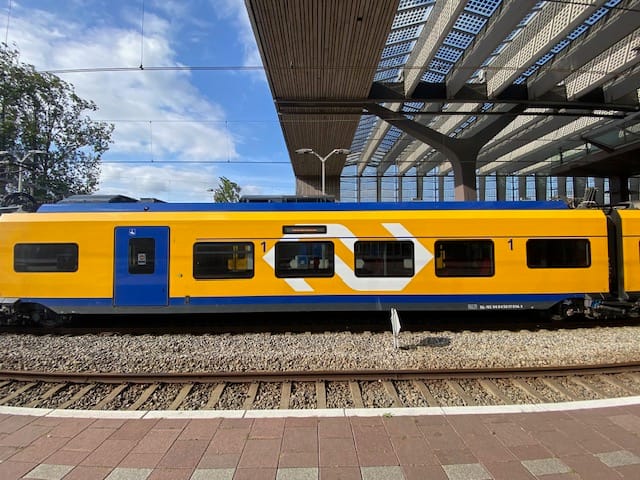
Belgium and the Netherlands have taken a step towards improving cross-border rail connectivity, with a potential direct Brussels to Eindhoven train emerging as one of the most symbolic and politically significant projects in a newly signed joint declaration on rail cooperation.
The declaration was signed on 18 February 2026 in Antwerp by Belgian Mobility Minister Jean-Luc Crucke (Les Engagés) and outgoing Dutch State Secretary for Infrastructure and Water Management Thierry Aartsen (VVD), marking a renewed commitment to accelerate long-discussed cross-border rail projects. The agreement aims to deepen cooperation between governments, infrastructure managers and railway companies, with a broader framework agreement expected to be finalised this summer.
A strategic Brussels–Eindhoven axis
At the heart of the declaration is the ambition to explore a direct rail link between Brussels and Eindhoven, connecting the Belgian capital with the Dutch Brainport region, one of Europe’s most important high-tech hubs and home to semiconductor giant ASML and a dense innovation ecosystem.
Despite the economic and political ties between the two cities, the rail connection remains fragmented. Travellers typically need to change trains multiple times, with journey times ranging from around 2.5 to 3.5 hours depending on the route, or even longer in practice when connections are missed.
Thierry Aartsen previously criticised the current situation in the Dutch parliament, noting that travelling from ASML’s headquarters in Eindhoven to Brussels, the European Union's capital, can require several transfers and take hours. Both governments now recognise the strategic importance of a faster, more reliable rail corridor linking the technology cluster to European institutions.
Under the joint declaration, Belgium and the Netherlands will investigate possible routes and service models.
Routes
Options range from enhancing services on existing infrastructure via Antwerp, Breda and Tilburg, to reopening or building entirely new rail corridors. One scenario discussed in Belgian and Dutch media is a new line roughly parallel to the E34 motorway, though such a project would likely cost hundreds of millions or even billions of euros.
Another possibility involves reusing or extending existing lines, such as the historic Hamont–Weert corridor, or reinstating a link between Turnhout and Tilburg, closed in the late 1980s.
But using High Speed Line 4 (Belgium) and High Speed Line South (Netherlands) looks like the more logical choice.
A historical connection revived after nearly a century
The idea of a direct Eindhoven–Brussels train is not entirely new. According to Dutch rail analyst Martijn van Vulpen, a direct express service already operated briefly in 1938, but was discontinued after just one year due to low demand.
Also, linking Brussels to Eindhoven was a rumour in 2022. The idea was to extend the the Charleroi-Brussels-Antwerp service to Noorderkempen, and then to Breda and perhaps Eindhoven. Thát would be a long journey, but you could cut off the Charleroi part.
Earlier, a railway line linking Hasselt, Valkenswaard and Eindhoven had been built in the 19th century with ambitions of connecting Belgian industrial regions with Dutch ports and international destinations, but it never reached its full potential.
The revival of the concept in 2026 reflects a radically different context: booming cross-border commuting, the rise of the Brainport technology cluster, growing European integration, and increasing pressure to shift mobility from road and air to rail.
Broader rail cooperation agenda
While the Brussels–Eindhoven link is the most high-profile passenger project, the declaration covers a wide range of rail initiatives.
Passenger rail improvements
Both countries want to increase capacity and reliability between Belgium and the Dutch province of North Brabant, including improvements to the existing S32 Antwerp–Roosendaal service and EuroCity Brussels–Rotterdam connections. They also aim to improve the performance of the Tri-Country Train linking Liège, Maastricht and Aachen, and to explore the restoration of passenger services between Hamont and Weert, suspended since 1991.
Discussions are also ongoing about reopening other cross-border routes, such as Hasselt–Maastricht, which has been the subject of political and legal disputes following the cancellation of a planned cross-border tram project.
Freight corridors and the 3RX project
On the freight side, the declaration revives cooperation on the 3RX corridor, an alternative to the historic Iron Rhine freight route connecting the Port of Antwerp-Bruges to Germany’s Ruhr region via Venlo. The original Iron Rhine route is politically sensitive because it crosses a Dutch national park, but the 3RX proposal uses largely existing infrastructure with targeted upgrades.
Other freight priorities include strengthening rail connections between the ports of Ghent and Terneuzen, with plans for a new line between Zelzate and Sluiskil to support future industrial and logistics growth.
Military mobility and resilience
Reflecting broader European security concerns, the declaration also highlights military mobility, rail resilience and capacity management. Both countries want to ensure that rail networks can support defence logistics and supply chains, aligning with new European Union capacity regulations.
Governance and next steps
To prevent the projects from stalling, Belgium and the Netherlands have agreed on a structured governance framework. Ministers responsible for mobility will meet at least once a year, supported by a bilateral working group meeting twice annually and expert-level consultations on individual projects. Regional authorities and infrastructure managers will be involved where necessary.
Next step: summer 2026
The goal is to translate the declaration into a concrete framework agreement by summer 2026, although funding for major new infrastructure, particularly the Brussels–Eindhoven passenger link, has not yet been secured.
A test case for cross-border rail in Europe
The renewed push for a Brussels to Eindhoven train comes at a time when cross-border rail is gaining political momentum across Europe, driven by climate targets, economic integration and security concerns. If realised, the corridor could become a flagship example of regional integration, linking Europe’s political centre with one of its most advanced technology ecosystems.
Reality check
However, significant challenges remain, including saturated rail capacity between Brussels and Antwerp, complex infrastructure decisions, and the high costs of new lines.
Whether the century-old ambition of a direct Eindhoven–Brussels train finally becomes reality will depend on political will, funding commitments and the ability of both countries to overcome longstanding bottlenecks.
For now, the joint declaration marks the clearest political signal in decades that the project is back on the agenda, and that cross-border rail cooperation between Belgium and the Netherlands is entering a new phase.
More on night trains and transcontinental train travel
- Belgian Mobility Minister wants to revive direct train service to Switzerland.
- NETHERLANDS | Arriva will not launch the Groningen to Paris service in 2026.
- Booking headache deters almost two in three long-distance rail travellers, poll finds.
- Snälltåget to run Stockholm – Malmö – Copenhagen – Hamburg day trains from May 2026.
- Nox night trains: a smart new cabin concept or just an unachievable dream?.
- How firm are Eurostar and Deutsche Bahn’s “2030s” Germany to London train link plans?.
- Leo Express files plans for extraordinary 2026 Bratislava–Ostend and Venice–Northern Germany services.
- GoVolta re-emerges to offer train services from Amsterdam to Hamburg and to Berlin using Belgian I10 carriages.
- Deutsche Bahn to offer a Cologne – Ostend / Bruges / Ghent – Cologne high-speed train connection in the summer of 2026?.
- Rail should be functional, not fine art: EU leaders call for standardisation and lower costs.
- Subsidies for night trains? “You cannot fix this until someone builds more sleeper and couchette carriages”.
- European Sleeper to operate Paris – Brussels – Berlin night train route from March 2026.
- Leo Express and Arenaways plan direct train between Prague and Venice.
- Italo targets the German high-speed rail market.
- Trenitalia eyes expansion into Germany’s high-speed trains market.
- European Commission wants to link all EU capitals by high-speed train by 2040… and that’s not going to happen.
- Travellers in Europe increasingly open to choosing trains over planes for short-haul journeys.
- REVIEW | European Sleeper night train.
- Paris Nightjet axed: France’s withdrawal threatens Europe’s night train revival.
- 2026 | Deutsche Bahn plans 4 ICE’s per day between Cologne and Antwerp and 16 per day between Frankfurt and Brussels.
- Iron Rhine gets renewed political attention in Belgium, the Netherlands and Germany.
- ÖBB prioritises Railjet over Nightjet: Is the night train revival a False Dawn?.
- Deutsche Bahn’s Antwerp – Brussels Airport – Leuven – Cologne ICE aims to attract tourists and Port of Antwerp-related business.
- EUROPEAN SLEEPER | Brussels to Barcelona night train to stop in Avignon, Montpellier, Narbonne, and Girona.
- Trenitalia, Deutsche Bahn and ÖBB launch Frecciarossa EuroCity trains linking Berlin, Munich, Milan, Rome and Naples.
- European Commission commits to single-ticket train travel, Back-on-Track unconvinced it will happen.
- EU train travel report sees increase in cross-border passenger trains and easier bookings.
- Brussels to Luxembourg by train under 2 hours by 2030?.
- Eurostar and five more train operators joined the European Agreement on Journey Continuation.
- ÖBB’s new Nightjet sleeper cars accommodate solo travellers with Mini Cabins.
- Trenitalia orders new Hitachi Frecciarossa trains suited for France, Belgium and the Netherlands.
- EUROCITY EC-8 | Basel to Cologne in SBB’s Panoramic Car.
- REVIEW | Trenitalia Frecciarossa 1000 Paris – Milan in Business Executive.
- RAIL TOUR OF EUROPE | How easy is touring Europe by train?.
- Eight train connections between the Netherlands and Belgium by 2030?.
- REVIEW | ÖBB Nightjet Amsterdam – Zurich night train.
- Nightjet Vienna/Innsbruck to Brussels, or how we got thrown off the train in Aachen.
- Why the expensive ÖBB Nightjet is really not that expensive.
- Ticket Distribution: the failure of railways to sell themselves.
- To use night trains in Portugal and Spain or not?.
- Night trains in Europe.
- Low-cost, long-haul trains to conquer Europe?.
- Fly now before it’s taxed and consider using the train instead.
Channel Tunnel updates
- A London-bound Eurostar terminal at Antwerp-Central? Highly unlikely!.
- Trenitalia (FS Group) and Certares agree strategic partnership to expand international high-speed rail operations.
- #CROSSCHANNELRAIL | Expanding UK-Europe train links most realistically leading to Switzerland.
- CHANNEL TUNNEL | Virgin Trains gains access to Temple Mills, ORR snubs links to Germany and Switzerland.
- Eurostar unveils €2 billion Alstom ‘Celestia’ fleet of double-decker sustainable trains.
- Gemini Trains partners with Uber for Stratford to France Channel Tunnel route.
- Eurostar and St. Pancras Highspeed back major station expansion to double capacity amid growing international demand.
- EUROSTAR | London – Frankfurt, London – Geneva and Amsterdam – Antwerp – Brussels – Geneva from 2030?.
- Alstom wants its double-decker trains to ride through Channel Tunnel.
- Ferrovie dello Stato Italiane (FS) plan to launch a new high-speed link between London and Paris.
- London St. Pancras Highspeed pledges financial support for cross-Channel rail services.
- London St Pancras Highspeed and Getlink aspire to to triple train services to France, Belgium and the Netherlands and add services to Germany and Switzerland.
- Heuro wants to operate high speeds trains between Amsterdam, Antwerp, Brussels, Paris and London from 2028.