UNITED KINGDOM | London St Pancras aims to cut boarding windows by up to 30 minutes

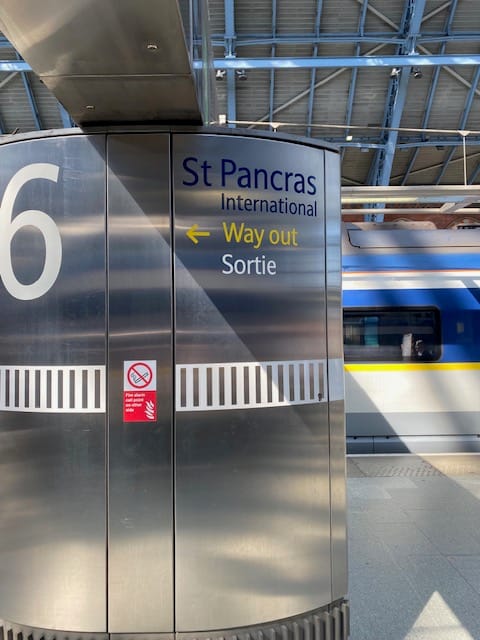
Eurostar passengers at London St Pancras International in the United Kingdom could soon be allowed to arrive much closer to departure time, as plans are being considered to cut boarding windows by up to 30 minutes. The proposals form part of a wider effort to reduce overcrowding and move away from what station managers describe as an increasingly airport-like experience for international rail travellers.
At present, Eurostar passengers are generally required to check in around 60 minutes before departure, with official guidance recommending arrival between 45 and 75 minutes in advance. Under the proposed changes, passengers would be permitted to board trains as little as 30 minutes before departure, allowing a shorter dwell time in the departures area and a more streamlined journey through the station.
Station executives believe that many passengers should be able to go straight from security checks to the train, similar to the experience at domestic railway stations, rather than waiting in a congested lounge.
London St Pancras Highspeed, the operator of the station and the HS1 high-speed line to the Channel Tunnel, has acknowledged that the current model has drifted too far towards the aviation experience.
The company’s chief commercial officer, Wendy Spinks, said that international rail should not replicate the airport departure lounge model, where passengers check in, pass through security, wait in a lounge and then rush to the gate. She added that although some travellers will still prefer to arrive early, a significant proportion should be able to board more directly and efficiently.
Remodelling
The proposed changes are linked to a £100 million remodelling programme designed to unlock additional international capacity at St Pancras.
While the Channel Tunnel and the station’s five international platforms can accommodate more trains, processing space within the terminal has become the main bottleneck.
Over time, security and border processing requirements have expanded, reducing the amount of usable space for passengers once they pass through checks and creating a mismatch between what the rail route can handle and what the station itself can process.
Brexit and EU's Extry/Exit System
Congestion has worsened in recent years following the expansion of post-Brexit border controls, including the installation of biometric kiosks linked to the European Union’s Entry/Exit System.
These measures have significantly reduced the size of the departures lounge, often leaving passengers with limited seating and crowded waiting areas. As part of the redesign, queuing areas are expected to extend into the adjacent arrivals hall, which is currently underused, and platforms may be shared between operators. Under this model, passengers would make their own way to the correct service instead of being held in a central departures lounge until boarding is called.
Increased competition
The overhaul is also intended to prepare the station for increased competition on Channel Tunnel services later this decade. St Pancras Highspeed is currently evaluating applications from potential new operators, including Virgin Trains and Trenitalia, which has indicated plans to launch services through the Tunnel by 2029 based on a France-centred operating model with a new high-speed maintenance base north of Paris.
Recommendations on access rights to the London station are expected to be submitted to the UK’s Office of Rail and Road in the coming weeks.
Capacity
In parallel with these developments, St Pancras aims to significantly increase capacity, with ambitions to raise passenger throughput from around 2,000 per hour to nearly 5,000 per hour by the end of 2028.
Reducing boarding times and allowing travellers to arrive closer to departure is seen as a key measure to spread crowds more evenly, ease pressure on station facilities and improve the overall international rail experience.
While the proposals have not yet been formally confirmed, they reflect a broader push to make high-speed international rail more convenient and competitive with air travel.
For now, passengers are still advised to arrive well in advance of their Eurostar departure, but if the plans are implemented, international rail journeys from London could soon become faster and less congested from the moment travellers enter the station.