YES TO THE NIGHT TRAIN | Plea for reclining seats and 6-berth compartments

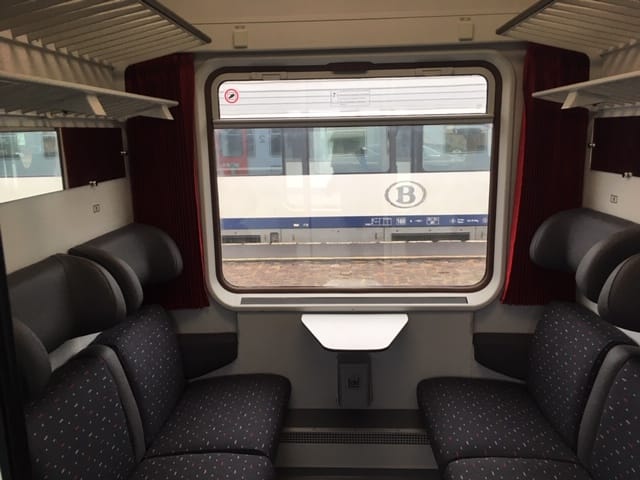
For the first time in half a century, France will launch the construction of brand-new night train rolling stock in 2026. The collective Oui au train de nuit (Yes To The Night Train) stresses the need for multiple comfort levels, from affordable budget options to business-class cabins.
Capacity is a key factor if night trains are to become truly popular, with low fares that can compete with cars and planes.
Night trains: a mobility solution for the future
Critics of night trains often claim they have 'low capacity'. In reality, night trains can be highly capacious. In 2019, the Occitan night train (Paris - Toulouse - Latour-de-Carol - Rodez) offered 876 seats across 16 carriages—comparable to a classic single-deck TGV (754 seats) or four Airbus A320 aircraft.
Price is one of the main determinants of long-distance travel choices. On high-speed rail, demand is highly price-sensitive, which is why TGV sets are designed to maximise capacity. The same logic applies to night trains, especially as demand is now constrained by a shortage of seats.
However, some start-ups are promoting luxury concepts that drastically reduce capacity, mainly to attract investors. At the same time, recent night train orders have delivered poorly designed high-capacity options, especially reclining seat coaches, by manufacturers such as Siemens and Construcciones y Auxiliar de Ferrocarriles (CAF).
This raises a key question: how should comfort be designed in the night trains of the future?
Reclining seats: the most capacious option must also be comfortable
Reclining seat coaches are essential for low-cost travel and can carry up to 76 passengers per carriage. Many operators offer them, but recent designs need major improvements: seats must genuinely recline and include proper sleeping accessories.
Until 2020, SNCF reclining-seat coaches offered 76 seats per carriage. They were never refurbished due to budget constraints and were replaced with less comfortable cars with rigid, barely reclining seats—and lower capacity (58 seats).
Future orders must ensure real recline angles, comparable to historic Corail BSI coaches or night buses. Yet some new ÖBB Nightjet coaches built by Siemens have non-reclining seats, an obvious design failure.
Retractable footrests and leg rests are also essential, as used widely in night buses. These must fold away to preserve legroom. Some CAF-built trains (such as the Caledonian Sleeper) have limited recline and poor legroom, again a missed opportunity.
Headrests should include side wings to prevent the head from falling sideways during sleep. Instead of optimising seating accessories, some manufacturers simply reduce capacity, for example, only 33 uncomfortable seats per carriage in some CAF designs.
Maintaining around 76 seats per carriage is important, and in any case more than the 60 places offered in couchette coaches. High capacity helps during peak demand and ensures fewer passengers are left behind, particularly on regional routes with limited alternatives.
Night trains also foster social cooperation: passengers often coordinate reclining seats together, creating a shared experience and a sense of collective etiquette—one of the unique social aspects of night train travel.
Night buses are major competitors in this segment, and train designers should study their seat ergonomics. Properly designed 76-seat coaches can offer more comfort and space than night buses, without excessive costs.
Six-berth couchette compartments must be preserved
Six-berth couchette compartments offer 60 places per carriage and are unfairly criticised. They are the most popular comfort level on SNCF night trains, with very high occupancy rates. They enable low fares while allowing passengers to sleep properly.
Claims of “unbearable overcrowding” often come from decision-makers who do not use these compartments themselves. In reality, shared compartments foster mutual respect and a positive collective experience.
Most night train passengers in France sleep with strangers in shared compartments every day, demonstrating a renewed civic spirit and conviviality. This model remains widespread in Eastern Europe and should be defended.
Six-berth compartments are not only for budget travellers: they fit the holiday spirit and group travel. The Travelski Night Express (2025–2026) uses only six-berth compartments, proving their appeal.
Four-berth compartments are not a universal replacement
Four-berth compartments are larger and offer fewer places: 36 versus 60 per carriage. Replacing all six-berth compartments with four-berth ones, as Renfe did in Spain, increases costs per passenger by about 66% and makes night trains harder to finance.
Demand for shared accommodation remains strong, as seen in hostels with six- or eight-bed dormitories. Many travellers actively seek low prices, and six-berth couchettes remain highly in demand on SNCF and European Sleeper services.
Mini-cabins: interesting but not a universal solution
New Nightjet trains include mini-cabins or 'capsules', but they have drawbacks: limited luggage space, noise from sliding doors, and complex boarding logistics due to separate luggage storage.
They are also less practical during daytime travel on long routes, where passengers may prefer sitting rather than lying down for 14 hours. Experimental designs (e.g., by Škoda) are promising but should not replace proven solutions.
A useful innovation: adjustable middle berths
On journeys longer than 10–12 hours, the middle berth should be foldable, allowing daytime seating. This is standard practice on long-distance trains in Eastern Europe and Asia and should be adopted in Western Europe as well.
This feature also allows operators to convert six-berth compartments into four-berth compartments during low demand and is useful in sleeping cars with three-berth cabins.
Business-class comfort is necessary but for a minority
Private cabins, sometimes with showers and toilets, are needed to attract business travellers and shift them from aviation. However, showers are rarely used; station showers are cheaper and more efficient. Toilets and washbasins are more essential.
New Nightjet sleeping cars offer only 20 places per carriage, down from 30 in older models. Lower capacity inevitably increases costs. Business-class travellers in Northern Europe may afford this, but such budgets are not universal, especially for regional routes.
Mixing comfort levels is essential
Some start-ups propose removing six-berth compartments or reclining seats to create luxury-focused trains. This reduces diversity and excludes low-income travellers.
Night trains should be inclusive, offering multiple comfort levels in the same train, as most current services do. European Sleeper is an example, with seated, couchette, and private cabin options covering a wide price range.
Rolling stock will last decades, so proven high-capacity solutions must be prioritised.
Increasing capacity in the future
Historically, night trains of up to 23 carriages and over 1,100 places operated in France. Longer platforms and trains could return. Double-deck night trains (as in Austria and Finland) could further increase capacity where infrastructure allows.
New rolling stock should be interoperable across Europe, enabling routes to Spain, Italy, Switzerland, Germany, Belgium, and Scandinavia.
How many places per comfort type?
As in TGVs, around two-thirds of capacity should be affordable and one-third premium. Business travel has declined since 2020, so relying solely on luxury segments is risky, especially with competition from low-cost airlines.
A balanced 16-car night train could include reclining seats, six-berth and four-berth couchettes, mini-cabins, sleeping cars, and service cars, totalling around 750 seats—similar to a classic TGV.
A strategic moment for night trains
France plans to order up to 340 night train carriages. Designers, manufacturers, and leasing companies all have incentives to optimise capacity and versatility for decades of use.
The key questions remain:
- Will six-berth compartments be preserved and valued?
- Will reclining seats finally be genuinely comfortable and high-capacity?
For Oui au train de nuit, the answer must be clear: capacity, affordability, and inclusivity are essential if night trains are to become a mass mode of transport again.